Consistently sanctioning occupied territory is necessary for enforcing international law
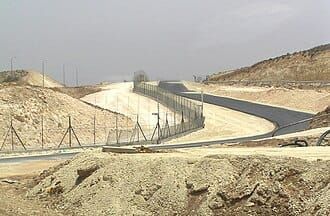
In the latest of many diplomatic splits between Western Europe and the United States, the Labor-led government of the United Kingdom announced sanctions on the goods and (more importantly) services produced by Israeli settlements in occupied territory in the West Bank and Golan Heights. The UK action follows more limited sanctions previously passed by Spain and Ireland, and were followed by coordinated sanctions from France and Canada. The move has led to furious debates - many of which seem to attempt to blur the lines between Jewish citizens of the countries involved and Israel, with British Chief Rabbi Sir Ephram Mirvis claiming it represented a ‘dark day for British Jews’ in a statement that seemed to imply that the actions were motivated by antipathy towards Judaism as a religion or ethnicity generally.
These accusations, especially against Foreign Minister Ed Miliband (who is himself Jewish), are spurious. Several other arguments against these sanctions may seem more substantial but similarly fail to hold up under examination. As some (exclusively Democratic) US Senators begin to broach the topic of sanctions on Israeli settlement construction, answering these arguments effectively, and making the case for a consistent policy of sanctioning occupied territory, takes on more acute importance.
One critique of these kind of sanctions – which appears in essentially every debate over Israel – is the accusation of hypocrisy or false moral equivalence. This comes in two flavors: In its more specific sense, the accusation is that countries that sanction Israel but not the Palestinian Authority are ignoring bad behavior on both sides. The broader flavor of criticism is that Israeli actions, however bad and even asymmetrical, are not unique, and posits that therefore ulterior motives (antisemitism, anti-Western campism, etc) are the true motivating factor. However, there are relatively few cases comparable to the West Bank and Golan, and further examination will show that in that specific instance - the long term occupation of territory not legally recognized by international law - is a specifically appropriate use of sanctions.
First, to address the inevitable rhetorical questions of ‘why Israel and not X country’, where X indicates a state with an admittedly atrocious record on human rights (there are many candidates). It’s true that a world in which the wealthy countries engage in trade only with countries that reach certain minimum standards of human rights may be a laudable long term goal (though it is important to consider the substantial human development costs of sanctions against poor countries). However, sanctions against the West Bank and Golan settlements are not primarily enacted to bring about this broader goal, and so bringing up Saudi Arabia or indeed the Palestinian authority is largely irrelevant. Rather, the idea of sanctions on the West Bank and Golan settlements is to defend a much more limited and universally accepted conception of international law, the prohibition against conquest and annexation in aggressive war, and especially against settling civilians in occupied territories to create facts on the ground designed to make such an annexation ‘stick’.
This basic principle - that conquest and occupation of territory cannot be justly allowed by the community of nations - is much more workable than wider claims about human rights, and benefits from being both easily definable and generally compatible with the idea of state sovereignty that governs most international bodies, particularly the United Nations. Article II of the UN charter makes this extremely limited claim, demanding members “refrain in their international relations from the threat or use of force against the territorial integrity or political independence of any state”, differentiating this goal from “matters which are essentially within the domestic jurisdiction of any state.” While there are numerous examples of states committing horrific acts within their domestic jurisdiction, the specific question of occupation and annexation comes up far less frequently, and very rarely in cases as longstanding as Israeli occupation of the West Bank or Golan Heights. Thus, the ‘whataboutism’ argument largely falls flat, as is all the more obvious given the reaction to the nearest point of comparison, Russian occupation of Crimea and parts of Eastern Ukraine.
When Russia annexed Crimea and large portions of Luhansk and Donetsk in 2014, no state except the US was in any position to stop them, and even for the US such an action would have required a military commitment unseen this century and run a risk of literally apocalyptic escalation. So, rather than respond with what would be justified but possibly unwise military force, Europe, the US, and Canada responded with sanctions - both on specific sectors of the Russian economy and on economic interaction with Crimea specifically. Since the full scale invasion of Ukraine in 2022, much broader sanctions were adopted, and those on occupied territory seem to have had particularly strong public support - such that even Israel (which has declined to participate in the broader sanction of Russia) has begrudgingly rejected shipments of grain from occupied territories. There can be little doubt that these sanctions are justified, since the alternative is to tacitly accept Russian aggrandizement through conquest and the sanctions themselves have a goal - territorial integrity of a state - that is theoretically accepted by all UN members.
The European Union has long been at the forefront of these sanctions on Russia, but without a parallel commitment to sanctioning Israeli settlements, these legal actions seemed self-serving, showing a dedication to international law only when specific threats to Europe were involved. As Spanish Foreign Minister Jose Manuel Albares argued in April 2026, European credibility in calling for sanctions on Russia was seriously undermined when it failed to do the same in Israel. Far from showing a particular animus against Israel, the introduction of sanctions on Israeli settlements in the West Bank and Golan Heights shows greater consistency of application, and is a step towards recognizing human equality rather than privileging the lives and rights of those on the European continent more highly than elsewhere. Extending this policy to the rest of the European Union would multiply the benefit.
The idea that sanctions are an overreaction, or that the economic harm inflicted is unjustified, is similarly unsustainable. Sanctions are a relatively mild consequence when one considers that enforcing the prohibition on annexation can justifiably be accomplished by the country or people targeted, by means including lethal force. This is not only recognized in Article 51 of the UN Charter, but outside a few philosophical or theological disputes, this right to national self defense is accepted in most political theories of the state. Generally, liberal internationalists also hold that this can be justly undertaken by one state on behalf of another – for example, France and the UK declaring war on Germany in defense of Poland. Sanctions become a viable alternative to military intervention when mutual defense runs into pragmatic limits - as for example it did when a militarily unprepared Europe faced Russian expansionism in Ukraine the first time. But it is hard to argue that economic measures are disproportionately harsh in a case where it is near universally agreed that even military resistance and intervention is a justifiable option.
Moreover, unlike punitive sanctions on human rights abusers, sanctions on occupying powers have distinct goals and a comprehensible path to reach them. One goal, especially those directly on occupied territory, is to limit the economic viability of the annexed regions and thus reduce the incentive to annex more. Economic sanctions are rarely if ever enough to convince a state to pull back from territory it has occupied; strategic considerations are generally too strong, as is the intangible but often decisive factor of national pride. The hope is that if occupied territory is economically uncompetitive due to its isolation from the outside world – and especially questions on the provenance of goods and services means that sanctions on occupied territory create a broader drag on the national economy – there will be less incentive to launch future occupations. This goal benefits from being easily explainable and comports with people’s intuitive understanding of ‘aggression’ and ‘theft’..
And finally, while the material consequences of sanctions for people living under them is attracting scholarly attention as a human rights issue, the question of sanctioning Israeli settlements or otherwise economically penalizing the occupation is once again more like the case with Russia. Like sanctions on Russia, those being levied and proposed on Israeli occupied territory are targeting a population of some economic means, unlikely to be deprived of the necessities of life as a result of these trade restrictions - certainly in comparison to those living under the occupation. Even more than in the case of sanctions currently in place in Russia, which affect Russian living in the entire country, sanctions on Israeli settlements will have the effect primarily on Israeli citizens who definitionally have the legal right to return to their country - de jure Israel - if ever the economic burden does become crushing.
There is one more frequently made argument against extending sanctions to all occupied territories - that, given the inconsistency in application of sanctions by other countries, there is no point in western states attempting a principled stand on the question. In its extreme form, the argument goes further - that the ‘west’ (however defined) is weakening itself by imposing sanctions on Israel, a potential ally, while countries like China reap the benefits of trade not just with Israel (including substantial business in occupied territories), but also with Russia.
From a strictly realist perspective, there is a logic here. However, rather than showing a defect in the argument for sanctioning occupied territories, the argument shows the need for more energetic action around the world, and especially in the United States. As a top trading partner of Israel, the United States has unique leverage that, if brought to bear in support of European efforts, could actually force a change in Israeli behavior. This would not in an instant bring symmetry to the question of sanctions - China, India, and other states would continue to have their own interests, and to pursue them. But a consistent policy around sanctions on occupied territories would make appeals for international solidarity and a rules based order ring less hollow with other leaders and especially with global electorates. In a world where the US position of exceptional geopolitical power continues to erode, developing strong norms to discourage acquisitive warfare should be a top priority - and only through consistent application of the principle can that be accomplished.
Unlike European efforts at sanctioning both Russia and Israel - efforts which continue to expand - the current US proposals are unlikely to be immediately adopted. However, given the rapid shift in public opinion around Israel and the increasing aggressiveness of settlement construction, there is a real chance to move these policies forward before the decade is out. Liberal internationalists who see the value in consistent application of standards and the unique importance of sovereignty and territorial integrity should be at the forefront of efforts to make that happen.