Laws restricting boycotts remove a time-honored tool from civil society
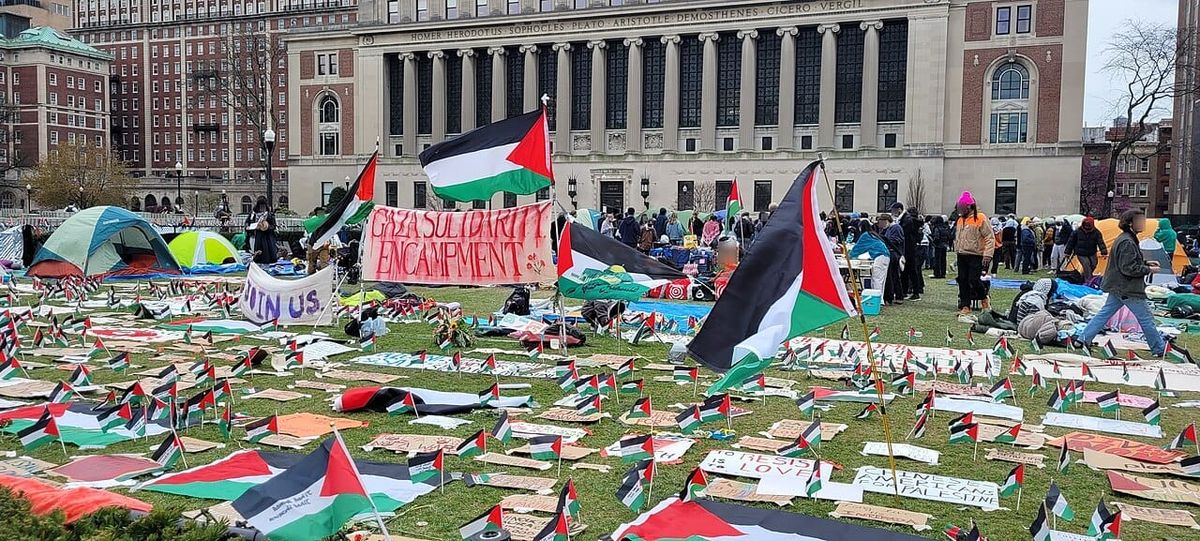
At the height of the Israeli invasion of Gaza, which, despite a ceasefire, continues to claim lives, US college campuses were the sites of some of the most intense organizing in opposition to Israeli policies and US support for them. The lion's share of US media coverage went to debates on how universities should respond to them - with many arguing universities were overly draconian in their crackdown, while others, including the present administration, claiming that university responses constituted civil rights-violated antisemitism.
Far less attention seems to have been paid to the actual demands of students, including perhaps the most relevant immediate demand of students - divestment of university funds from firms linked to Israel or the occupation of the West Bank, or a boycott of certain kinds of interaction with Israeli institutions. Perhaps this is because in this area, universities in many cases had no room to negotiate at all. A wide range of states - some of them with liberal reputations - had passed ‘anti-BDS’ laws. These statues aim to punish firms that participate in the ‘Boycott, Divest, Sanction’ movement, which seeks to economically isolate firms associated with Israeli occupation or Israel itself. Given that in many industries the government functions as an effective monopsony power, as the only entity of any scale that contracts for various services, this can have a distinct chilling effect on businesses that seek to limit their interaction with Israel either as a political statement by their owners or as a concession to investors who seek to do so. Now, with regard to universities in particular, congress is poised to impose nationwide restriction, with a bill to withhold funding from universities that boycott or limit academic cooperation with Israel having passed the House with near-universal Republican support and 33 Democratic supporters.
Proponents of anti-BDS legislation argue that the movement itself is unfair and often tinged with antisemitism. However, I would argue that forcing individuals or firms to engage in international commerce that runs counter to their consciences is essentially illiberal, in a way that prohibitions on racial discrimination are not.
The ability of commercial connection and interaction to spur social change has long been a liberal theme. Frederick Douglass, at the end of his famed “What to the Slave is the Fourth of July?” speech, added a note of almost millennial optimism:
Nations do not now stand in the same relation to each other that they did ages ago. No nation can now shut itself up, from the surrounding world, and trot round in the same old path of its fathers without interference. …But a change has now come over the affairs of mankind. Walled cities and empires have become unfashionable. The arm of commerce has borne away the gates of the strong city. The fiat of the Almighty, “Let there be Light,” has not yet spent its force. No abuse, no outrage whether in taste, sport or avarice, can now hide itself from the all-pervading light.
Like many liberals, Douglass clearly saw commerce as a force that could expand the realms of human equality and rights. The shrinking of distance due to new technology was key to his vision, but so were the ties of economic interaction. However, if every abuse and outrage is required to be born, no matter how it pricks the conscience of the buyer, how can commerce have the hoped-for effect? Indeed, in both the British Empire and United States, the use of boycotts against sugar grown by enslaved people had been a key part of the movement to end the slave trade, though the efforts by William Lloyd Garrison and others to extend that boycott to cotton grown in the Southern States were less successful. Even earlier, boycotts of English tea and other goods were a key organizing feature of early colonial independence sentiment in the 1760s, and the organizations of merchants working to prevent the importation of English goods would eventually form the core of colonial resistance to Britain.

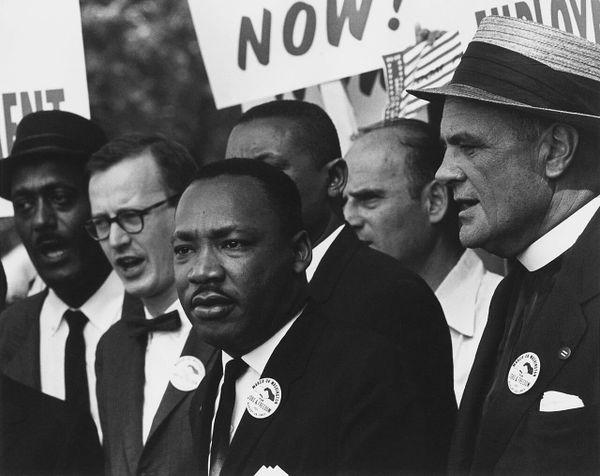
While ultimately the colonial boycott of English goods lead to violent armed clashes and eventual war, the tactic also has a long and honorable pedigree in the non-violent movement. Martin Luther King Jr described their domestic efficacy in his speech ‘Where Do We Go From Here?’, applied to one company that was failing to equitable hire Black workers:
I went to Cleveland just last week to sign the agreement with Sealtest. We went to get the facts about their employment; we discovered that they had 442 employees and only forty-three were Negroes, yet the Negro population of Cleveland is thirty-five percent of the total population. They refused to give us all of the information that we requested, and we said in substance, “Mr. Sealtest, we’re sorry. We aren’t going to burn your store down. We aren’t going to throw any bricks in the window. But we are going to put picket signs around and we are going to put leaflets out and we are going to our pulpits and tell them not to sell Sealtest products, and not to purchase Sealtest products.”
King makes clear that in his vision economic action as an alternative to more aggressive direct action and destruction of property, not a precursor to it. That King was able to turn his followers' efforts in this direction is a testament to the value of boycotts and other economic means in gathering the force of individual consciences into a movement that can cause real expense to its enemies without property destruction and the dangerous reaction that invites. This addresses one major accusation against the BDS movement - that it is merely a stalking horse for more violent actions to dissolve the Israeli state or attack the Israeli people. It seems much more likely that allowing these kinds of boycotts gives an outlet for those who are understandably shocked at the actions of the Israeli state to express that horror without violence or even real confrontation - and that prohibiting them may push more individuals to violence.
The other danger brought up is that of antisemitism. This is not to be lightly dismissed - after all, economic marginalization, including by boycotts and picketing, was also part of the marginalization of Jewish populations in interwar Europe, including but not limited to Germany.
And the reality is that of course we cannot be sure whether a particular entity that chooses to boycott some part of the Israeli economy is acting that way because they truly care about the Palestinian people or because they harbor antipathy towards Jewish people and see a boycott of Israel as one way to put that bigotry into practice.
But the same is true for any country - no doubt there are those who choose not to do business with Chinese firms because they worry about China’s human rights record and fear their purchases may fund repression or even hostility towards US allies, while others do not want to do business with China because they harbor racial animus against the Chinese people. Shall the states try to coerce their citizens into adopting the same Most Favored Nation system as the federal government? It seems to me much more compatible with liberal beliefs to let each person decide for themselves what foreign entities they will do business with.
And unlike racial bias, the motivation and impact here is much more legitimate: the point of boycotting a business owned by a Jewish American can only be to impoverish her or him, to do them some economic harm personally because of their religion or ethnicity. Even if inspired by genuine concern for Palestinians, harm against Jewish people indiscriminately is an illiberal flattening of their individuality to simply one axis, their ethnicity. This can never be a legitimate response, no matter how severe the atrocities that provoke it. However, the purpose of cutting ties with a firm domiciled in a country one disagrees with is much less suspect: entirely independent of the individuals involved, that firm still pays taxes on its profits to its home country. A consumer can be entirely without hostility or ill will towards the Israeli public and still not want to see their spending dollars directed end up in the coffers of a state they disagree with - indeed, one that increasingly surveils and targets its own citizens.
The same can be said of institutions, even non-profit ones like universities; there can be little doubt that the Israeli state benefits, in myriad ways, from the success of its universities, research institutes, etc. If stakeholders at a US institution is so horrified by the Israeli state that they cannot stomach contributing to the success of its institutions, that is their decision to make.
Ultimately, it cannot be up to legislators to determine with whom their citizens do business, and it is not appropriate to commercially or otherwise punish firms that engage in boycotts against any state, including Israel. Regardless of one’s view on the BDS movement targeting Israel specifically, the value of boycotts as a non-violent means of exerting economic pressure to too valuable to toss aside so lightly, or to invite such overbearing interference from state legislators.